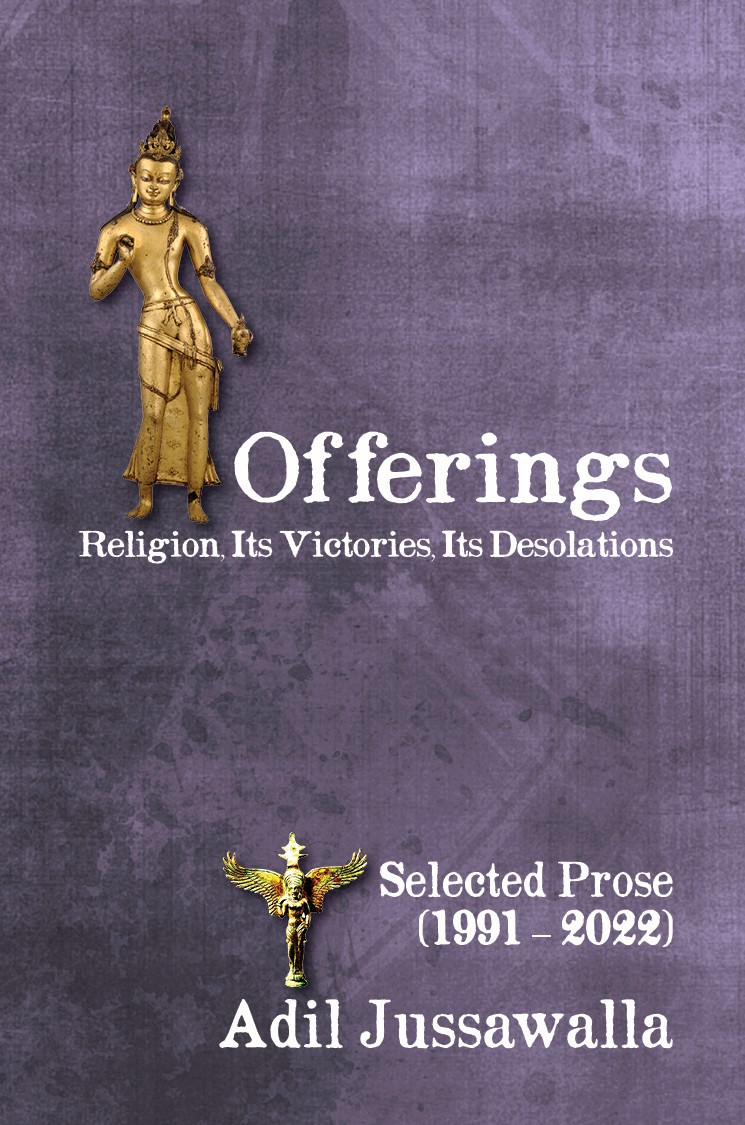
Description
During my childhood or adolescence, when I used to pray or was asked to pray, I must have been a believer. Later, I was an agnostic and, even intellectually, an atheist. I say ‘intellectually’ because, even when in my mind I was an atheist, turbulence, stress and the illnesses of those dear to me made me pray by myself or visit a fire temple or a church to offer my prayers. What follows (in chronological order) is not meant to be about my spiritual development or fall, but rather to indicate a pattern of thought, of constant making and re-making that isn’t complete, that has yet to find an area of rest that allows me to craft it into a pattern. — Adil Jussawalla
ADIL JUSSAWALLA was born in 1940. He is the author of six books of poems and two chapbooks. He was honoured with the Sahitya Akademi Award in 2014 and was Tata Literature Lives’s Poet Laureate for 2021. Selections of his prose have appeared in five books: Maps for a Mortal Moon; Essays and Entertainments, I Dreamt a Horse Fell from the Sky, The Magic Hand of Chance, The Diamond-Encrusted Rat Trap: Writings from Bombay and Body of Evidence: In Sickness and Health (1966-2002), the last published by Red River in 2024. He lives in Mumbai.
Contents
Preface
The Good Householder
Tragedy and Eclipse
A Swami and Friends
The Fundamentalist Within
Christmas Letter
Blasphemy: Words as Weapons of Change
Through a Glass Darkly
At the End of the Day
Serpent Story
Some Thoughts Before Christmas
Nafisa Ali, Rafique Sayed, ‘God’, and Me
Is This Any Way to Repent?
Looking for the Good Book
Matters of Faith
River Run Mad
Mumbo-Jumbo?
Is Anything Eating You? 84
Bloodlines
Re-bottling the Genie
The Stigma of Stereotype
The Dead Eye of a Fish, a Chewed Duck’s Wing
Words that Still Surface from Time to Time
Reviews
Read an extract in Matchbox by Usawa March ’26.
Sekhar Banerjee on Facebook
Written over three decades, these brief essays feel less like statements and more like returns, to doubt, to memory, to the old stubborn questions. A Parsi boy, a piano teacher, Buddhism entering almost by accident, and then the long afterlife of that encounter. Though not in that order. They are asymmetric and non-linear, like poetry. Not conversion, not rejection, something more provisional. As if belief and disbelief were merely two rooms with a thin wall, and one keeps reaching that thinness at the edge. It is more of being than becoming. He asks, somewhere, if transcendence is only ‘a silence in which all discursive thinking stops.’ The line lingers. Not answered, not dismissed. Just left there, like a door slightly open. Like a scented calmness inside a Buddhist monastery. What moves through these pages is not doctrine but drift. Hell, heaven, death, the small ethics and stereotypes we carry in our minds, everything is picked up, turned, weighed, put down again. The essays (1991–2023) gather around death and desire, blasphemy and habit, faith and its embarrassments. Literature keeps interrupting religion. Or perhaps the other way around.


