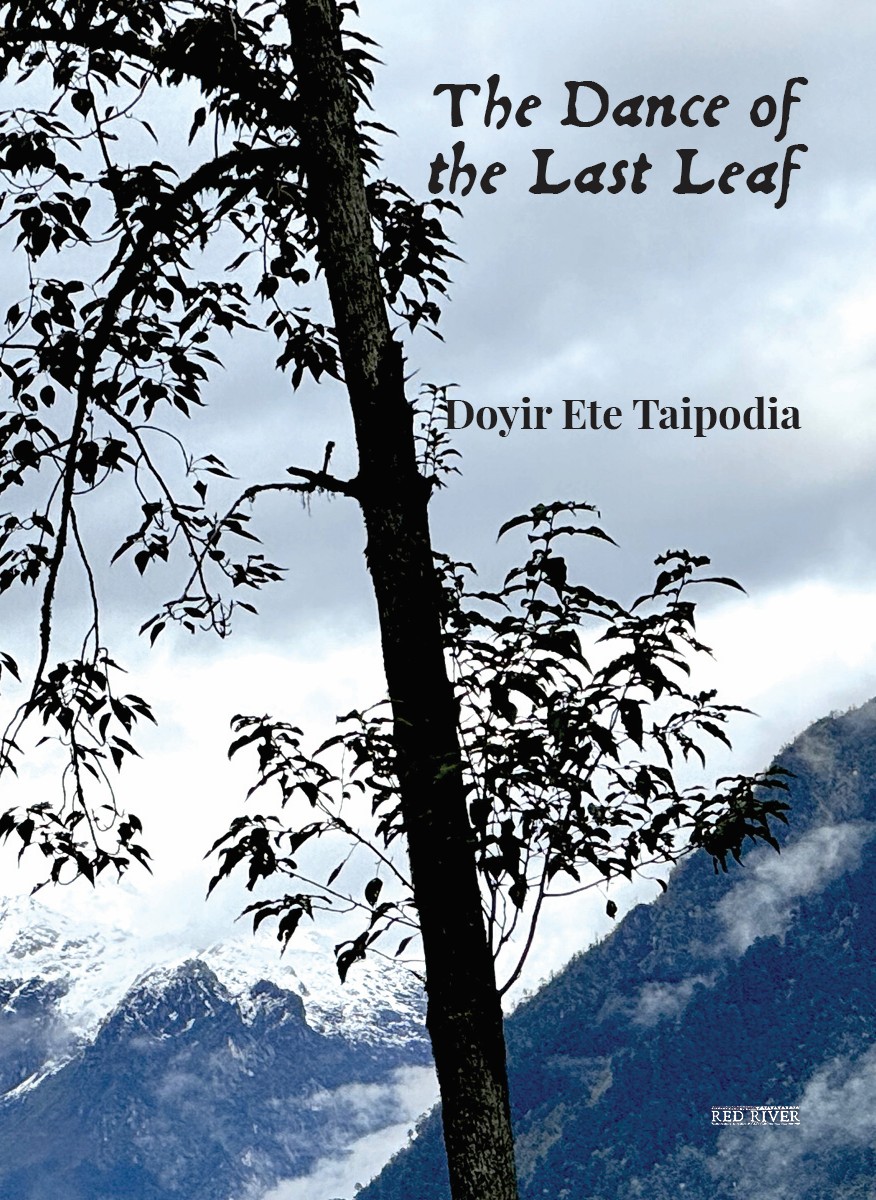
Description
The Dance of the Last Leaf is my way of telling the stories of my home, Arunachal Pradesh, and its people through poetry. These poems come from what I’ve lived, seen, and felt here. They capture moments of beauty, the stark differences within our community at times, as well as resilience and fragility at others. … This collection offers glimpses of the world I know: our ancestors, the elders in the villages, the vendors in the markets, the rivers, forests, and mountains, the changing landscapes, and the people moving through the ebb and flow of everyday life. At its core, the poems are inspired by the lived experiences of tribals of Arunachal Pradesh, especially the Galo tribe, and how memory, culture, and change intersect, sometimes gently, sometimes sharply. — Doyir Ete Taipodia
Doyir Ete Taipodia’s poems reflect the sensitivity stemming from tribal myths and beliefs, all conveyed through vivid metaphors and symbols in a lucid style and language. — Yeshe Dorjee Thongchi
Elegant in her words, Doyir Ete Taipodia’s poetry is sensitively rooted in her land, her thoughts, and emotions, as blissful yet subtle as the very angels that hover around us. — Dhruba Hazarika
Doyir Ete Taipodia’s debut collection, Dance of The Last Leaf, is a portal that transcends us to a world beyond our everyday life. The imagery in her poems is rich with folk references that personifies Arunachal Pradesh. — Madhu Raghavendra
Doyir Ete Taipodia is an Associate Professor in the Department of English at Rajiv Gandhi University in Arunachal Pradesh. Her research interests include oral narratives, memory, and cultural studies, particularly concerning tribal communities. Several of her poems have been published in Prayaas, a literary magazine of the Arunachal Pradesh Literary Society (APLS), and in Matrix Anthology, published by the North East Writers Forum (NEWF). She has also co-edited Matrix Anthology, Vol I, and Vol II in 2022 and 2025. Additionally, she regularly contributes literary reviews to The Arunachal Times, a daily publication from the state of Arunachal Pradesh.
Reviews
Read an extract in Usawa
Dr Yater Nyokir in Arunachal Times
For the tribal communities of Arunachal Pradesh, where history has long travelled by word of mouth, songs, rituals, and landscape, literature carries the weight of memory, identity, and belonging. It gathers what is scattered by time and change, holding together fragments of oral tradition, lived experience, and indigenous ways of knowing that are at risk offading into oblivion. It is from this fragile yet resilient cultural terrain that Doyir Ete Taipodia’s debut work, The Dance of the Last Leaf, emerges. Rooted in the land, people, beliefs, and everyday rhythms of Arunachal, particularly the Galo community, the book transforms personal memory into collective witness. Taipodia’s verse does not merely describe a homeland; it listens to it, records its wounds and its wisdom, and legislates quietly through memory, language, and indigenous consciousness.
Legislating Identity, Culture, and Memory – An Interview with Doyir Ete Taipodia by Yater Nyokir in Muse India
Most of the poems are deeply personal. Almost every poem began with some kind of trigger—maybe a personal experience, a touching scene, an insight from certain events, memorable people I have met, a sense of loss, or moments that stayed with me. These have all been important sources of inspiration. Many of these experiences also felt meaningful to me because they reflect things and situations that we hold very close in our culture and community. “Lost Words,” for instance, grew out of many conversations and debates about our oral tradition. We have this story of how the script was lost to us, which I find very interesting. What is also fascinating is that versions of this story exist across different tribes. I have also always been drawn to the stories of our ancestors, especially the legendary Abo Tani, our many cultural motifs, our faith and traditions, and even our everyday struggles as we grapple with the strong presence of modernity.


