Description
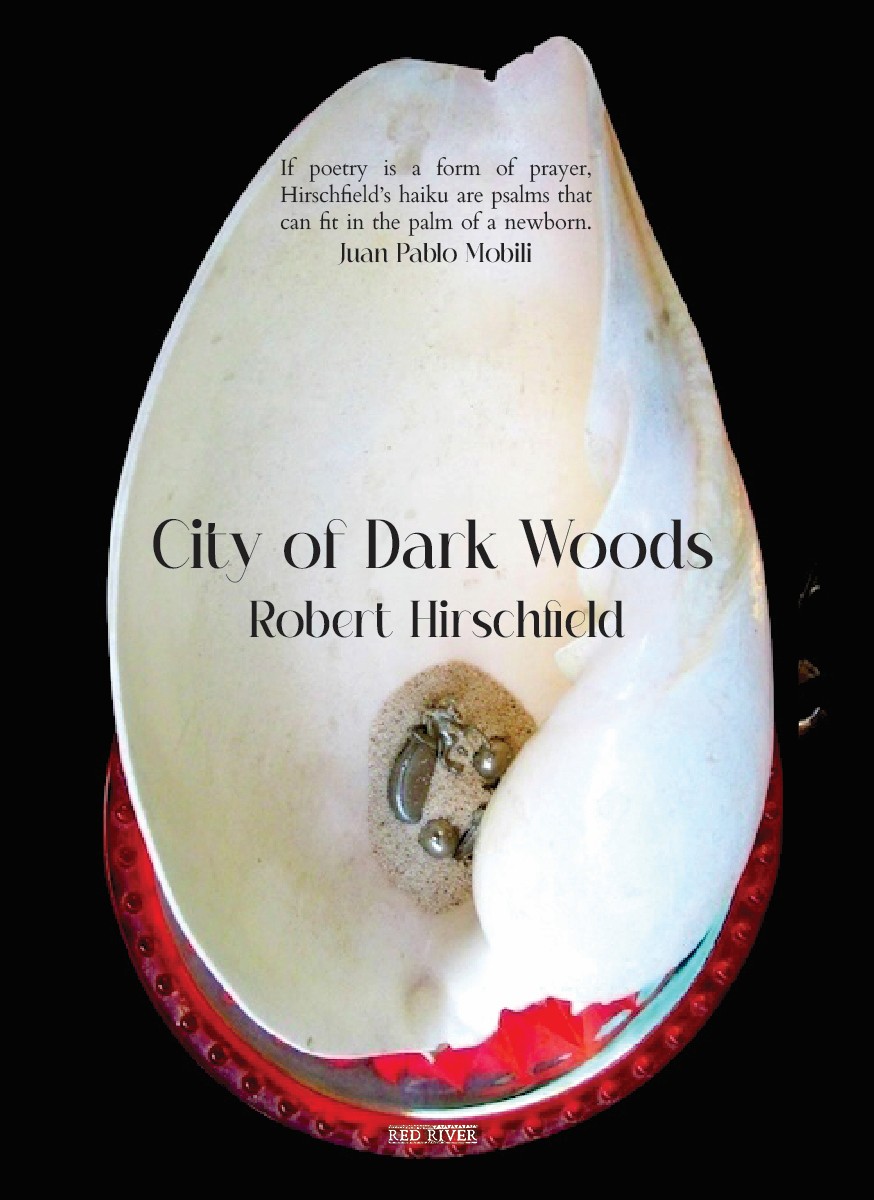
If poetry is a form of prayer, Hirschfield’s haiku are psalms that can fit in the palm of a newborn. — Juan Pablo Mobili
Hirschfield’s poems urge you to read slowly and deliberately. — Geethanjali Rajan
An important collection — one to be savored, first, then studied. — Scott Mason
Hirschfield gifts us ‘wonderment space’ in his compelling collection, as he plumbs meaning and mystery in his life. — Anne Burgevin
I genuinely admire and recommend this as one of the finest collections of poetry in haiku and haibun form. — Alan Summers
Robert Hirschfield’s City of Dark Woods is a deeply human attempt to sketch spaces through language. — Teji Sethi
This book is a stunning addition to haikai literature. — Melissa Allen
Robert Hirschfield was born the year World War Two broke out. He grew up in the Bronx, New York’s highest borough, whose winds still blow through many of his haiku. Perhaps because of the carnage that accompanied his birth, he spent many years as a journalist covering uprisings in Latin America, the Israeli-Palestinian conflict (focusing on peace activists in both camps), The Troubles in Northern Ireland, the insurrection against the monarchy in Nepal. To help pay the rent, Hirschfield took a job as a case manager for an agency providing housing for mentally-challenged homeless people. Haiku came in the form of a gift a woman gave him: Lucien Stryk’s Zen Poems of China and Japan. One poem in particular changed his life. It was written by Zen Master Dogen: The world? Moonlit/ Drops shaken/ From the crane’s bill. He was brought into haiku’s mystery of moments. He didn’t begin writing haiku immediately, but more and more, he began living in its space, with its of echoes of impermanence. When he did finally put pencil to paper, he was not a young man, but an old man made young by the slide of handfuls of words emptying into ageless silence.
FROM THE BOOK


