Description
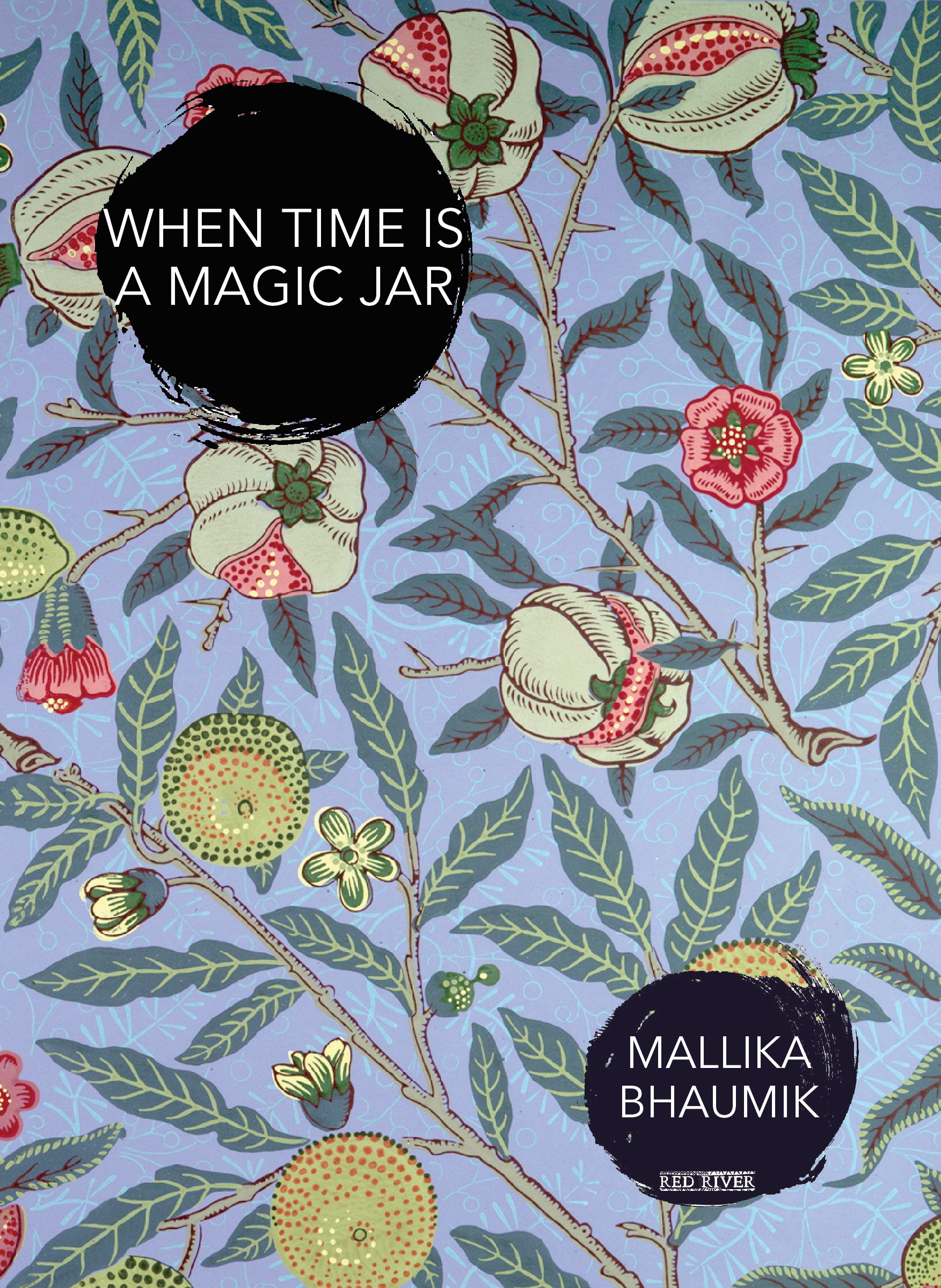
Mallika Bhaumik’s book of poems, When Time is a Magic Jar showcases the trials, travails and introspective journeys of a sensitive poet whose deft, empirical detailing of the ever-changing world around her is indeed noteworthy. A sense of nostalgia, dilemma and pain wrap many of the narrative poems with the subjective warmth of deeply felt responses and unsullied sincerity. Bhaumik’s riveting poems, arranged in thematic sections, traverse a significant range encompassing the cityscape, journeys within and without, gender injustice to monologic ruminations, with malice towards none. Bhaumik’s poems will surely touch the hearts and minds of informed poetry readers. — Sanjukta Dasgupta
In this book of poems, the poet refers the world as a ‘treacherous place’. Yet, she is deeply immersed in its essence — its affairs, nature, locales, relationships, conflicts and politics. She emerges not just as a poet of sensitive verses but as a soul wholly submerged in love, compassion and an unwavering faith in humanity. Through her metaphors, eloquence, silences and pauses, she unveils a fragile yet profoundly beautiful world — one that invites us to cherish, confront and witness truths our eyes, minds and hearts have long ignored. Mallika Bhaumik’s poems possess a lightness that mirrors the radiance of light itself. — Rahman Abbas
Mallika Bhaumik was a nominee for the Pushcart Prize for Poetry in 2019. Her poetry, short stories, essays, articles, travelogues, and interviews have been published in various journals, including The Punch Magazine, Madras Courier, Outlook India, Dhaka Tribune, Shot Glass Journal, Cafe Dissensus, Guftugu Journal, Grey Sparrow Journal, Kitaab, The Alipore Post, and Voice and Verse (edited by Tammy Ho of Asian Cha). Her writings have appeared in many reputed anthologies, the latest being her non-fiction piece in Our Stories Our Struggle: Violence and the Lives of Women, published by Speaking Tiger. The transliterated version of her personal essay, ‘Of Memories, Mahalaya and Moksha’ has been published by the Bengali daily, Ei Somoy. She has received the Reuel International prize for her debut poetry book, Echoes (2017), published by Authorspress. Her second book of poems, How Not to Remember (2019) was published by Hawakal Publishers. Her poems are part of the post-graduate syllabus of the English department of by the BBMK University, Dhanbad. She lives and writes from Kolkata, India.
Reviews
Mallika Bhaumik talks about When Time Is a Magic Jar in EKL Review
“This book is a collection of forty four poems written over a period of time. The different themes of poems in this collection focus on human emotions, society and the way it treats people. It brings up poems that revolve around the theme of urban nostalgia, love, loss, longings, betrayal, memories, autumn of age and death. It also carries poems that speak of homelessness, feminism, rape and global crisis like the Covid-19 pandemic, the effects of Ukraine war and the horror of genocide taking place in Gaza.”
Neera Kashyap in Scroll.in
Mallika Bhaumik’s third collection of poems, When Times is a Magic Jar, has memory and a lost past as major motifs in her evocative verses. For she is able to make time melt in the palm, shrink it to a dot, make it fluid so she can both dream and “rush back to chase the fireflies”. At its most primal, the past is about the tall, lean frame of a mother waiting to take her ten-year-old daughter home, the child prattling on, as they walk home together in the rain under a blue umbrella. Life right now is more difficult. For it is not only about the mother’s breathlessness, a dim retina and painful limbs but how these fragile years press upon the narrator, metaphorized by a tour site she plans to visit where a tree forces its way through a ruined temple roof. At the end, everything blurs.
Nazir Wani in Cha: An Asian Literary Journal
When Time is a Magic Jar by Mallika Bhaumik is like finding an old, dusty jar in your pantry. You can feel its warmth and almost smell what it once held, even though it is neither glossy nor well organised. The book is like that: a simple, curious object designed to contain things and release them. When you open it, you find a ray of sunlight, a cracked mirror. What strikes you most is how deeply the author wants you to linger over these minor details.
From the Book
Of City Tales and Crayon Images
The mid-morning buzz is about to mellow
when the fish vendor’s familiar voice sweeps
the lanes and bylanes of a South Kolkata
neighbourhood. A feverish child’s eyes
follow him from a window-side bed.
He shouts out the names of fish he has
in his aluminium degchi. The decibel
and urgency of his voice matches the rush
of local train announcements at Sealdah station.
The fish vendor carries the stench
of silvery scales on to the city asphalt.
His eyes scan the balconies and windows
of the houses for prospective buyers.
A waving hand from a small window
of a broad-walled yellow house makes him squint.
The cats follow the fish vendor
with shinning eyes. He is like the Pied Piper
of Hamelin, luring them to walk on.
They walk; feeling certain of his generosity
to toss away some remains to them.
The weighing scale goes down as the body
of a fish rides on it. The still eyes of the fish
has left the ripples of river songs
by the ghat, they stare at nothing,
like the dead of Gaza. The residue of their story
is descaled, sliced and cut.
In a parallel world
the feverish child,
the fish, the fish vendor, the cats
are crayon wishes on a white page.
They laugh and play
and ride a Ferris wheel
on a sun-lit day.
Appetite
Her body cracks open.
A language flows
through marshy wet lands.
She moans for him, misses his ruffian touch
on her flesh,
heaving,
pulsating
diving deep into the night.
The river widens,
the fish of fantasy swims upstream
leaving her famished.
Her hands trace the swell of her breasts,
fingers tug at the drawstrings of her salwar.
feels the dampness
in between the stem of her legs,
the heat of noon spreads within
the geometry of her mosquito net.
Finally, at daybreak, she sits down to eat.
Her wide bottom balanced on bricks,
a mouthful of chapati, slurps of slurry lentil,
a bite of green chili, belching out the scent of onion.
She feeds her bulging belly
and the growing egg therein.
Of Quarantine, Covid-19 and Parrots
It’s not yet dawn,
the dullness of another day
is almost half an hour away
from human touch.
An eerie silence shrouds
cities and towns
that wait like test reports
of a pathological lab,
ready to explode,
turning bodies into dens of virus,
or bursting into brilliant green
of hundred parrots soaring
in the gold of the morning sun.
Gift
If you ask me for a gift,
I have to tell you
I have gift-wrapped
my languid noon, quiet balconies,
the stillness of this room,
where our known and unknown worlds remain
neatly stacked on shelves with other knickknacks.
I gift you our leftover wishes
hung on the clothesline —
bleeding colours with every wash,
and the wafting aroma of grated lemon peel
from my online bakery class.
I gift you the memory
of stolen crimson kisses in high school,
my recent playlist,
my mundane hours.
I also wish to give you my unborn words
— words that might form an island
where our names rest
until the roots run deep,
deep enough to reach the complexity of my dreams
where poems become streets we walk on,
but never meet.
A Ritual of Tea
Tea is a verb for us,
a ‘doing word’ — well, that’s how
I teach verb to my younger students.
The first cup and our vocabulary sprouts
filling up the awkward spaces of inertia
creating conversation over this and that,
charting the course of the day
for two people — boring, monotonous,
who, in their midlife have nothing more to share.
Tea becomes a verb
after a tiring day when we sit
in front of the television,
news channels, IPL, reality shows grab
our attention
as we take sips from our blue cups,
removing the veil of wordless aridity,
till the ping pong of words
populate the room,
and we exclaim, feel aghast, wonder,
talk animatedly about who would win,
till our eyes dim.
We retire to bed
sleep like two continents.
Nirvana
The mercury climbs, your forehead burns,
the bedside window weaves a tale in your eyes,
the pearly face of the moon is your beloved’s,
swimming between the shadow dance
of whispering trees,
its paisley grey, moth-eaten memoir
brings back the faint hum of a lullaby.
The night drinks the luminance.
Stories sprout from the soil of its chest,
leaves, flowers, and fruits
of memory grow, bloom and fall.
You gather them as moments
while time melts in your palm.
The lines of these stories glow
as you make love to the moon’s body.
The gossamer lace
on the porcelain breasts
is a mystery to you.
You are a traveller,
ambling along starlit paths
with a desire to touch —
an uphill climb,
by the throb of the heart
a monastery stands
guarding century-old secrets.
A chant floats — nam myoho renge kyo.
The pink of the lotus lips
becomes your nirvana.


